How we grow
Fully sealed indoor hydroponics, explained simply.
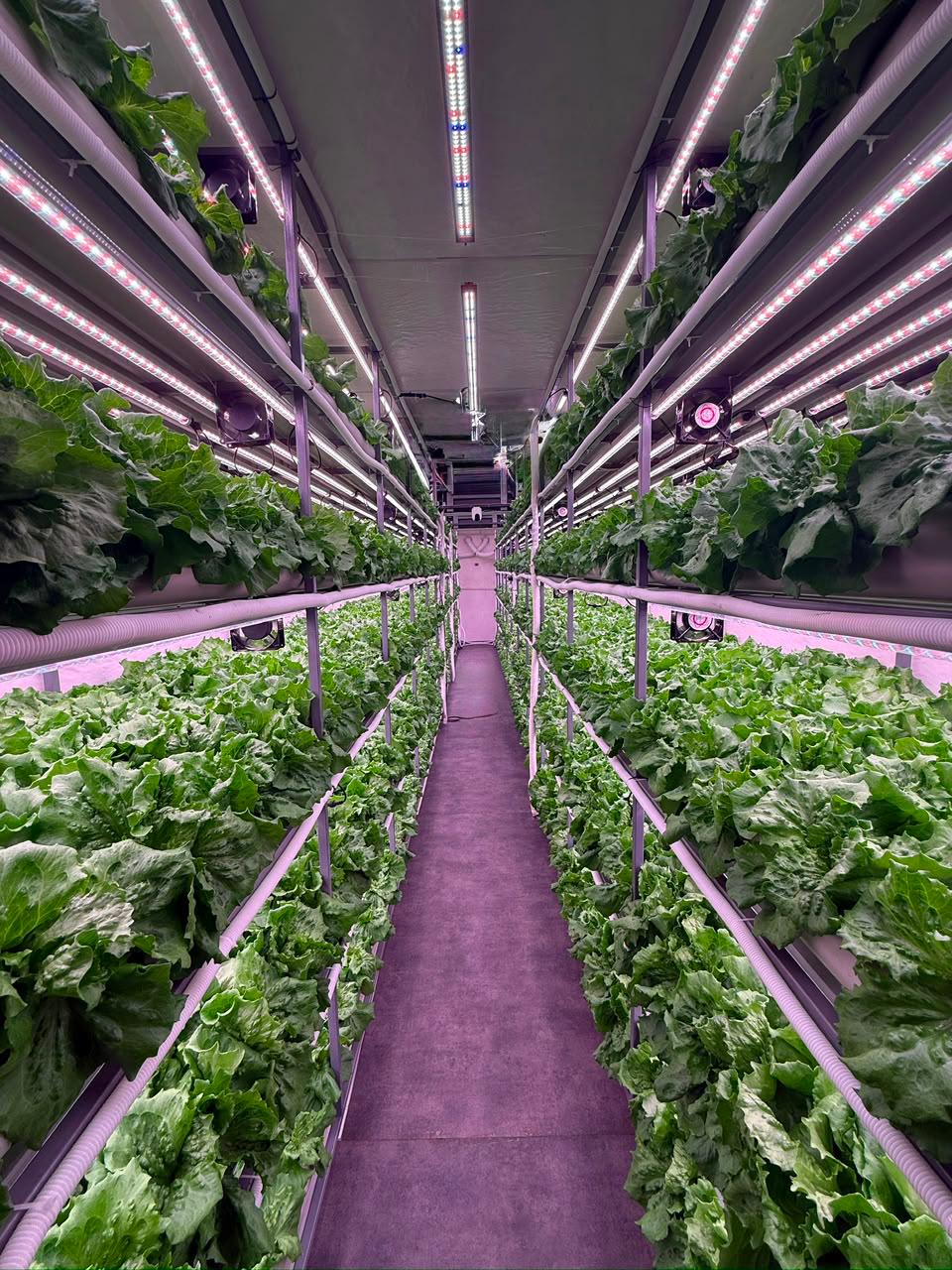
Two things keep our lettuce consistent: the hydroponic method, and the sealed indoor room it grows in.
Hydroponics
Plants fed by water, not soil.
Hydroponics means the plants grow in treated water rather than soil. Roots sit in a shallow, continuously moving stream of clean nutrient solution carrying the minerals a lettuce needs. Because the plant is not searching through soil for food, growth is faster and more uniform.
Fully sealed indoor
Protected from weather, pests and outside contamination.
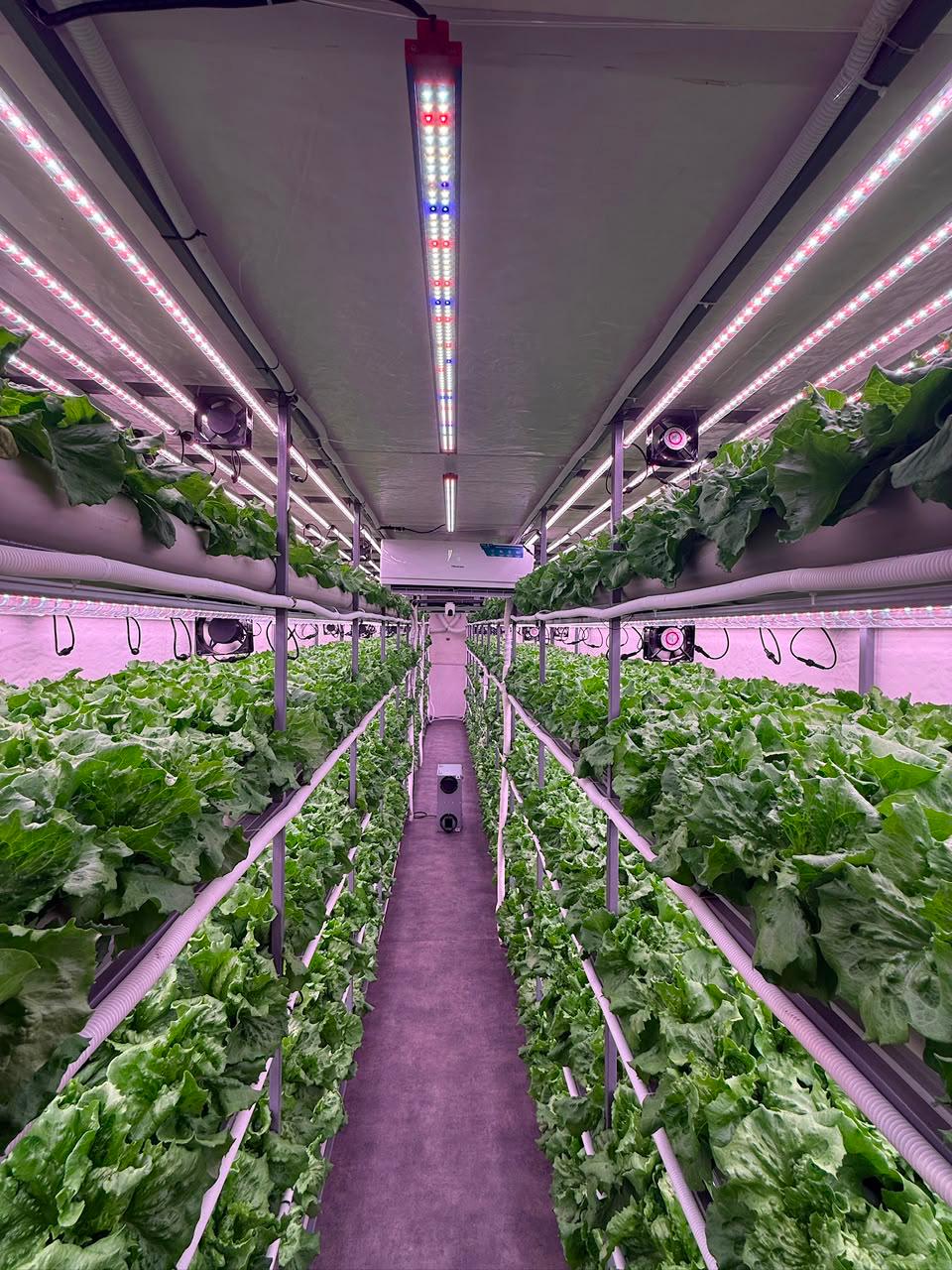
Everything happens inside a fully sealed indoor farm. The growing room is separated from outdoor weather, seasonal heat, dust and insect pressure. A clean environment is maintained from nursery to harvest, so no pesticide, insecticide or fungicide is needed at any stage. That is why the leaves arrive clean and residue-free.
The closed loop
Water is used, recovered and used again.
Nothing is discharged to the ground. Water is first filtered through reverse osmosis, passed through UV treatment to remove bacteria, then mixed with measured nutrients. The solution leaves the reservoir, feeds the crop, drains back, is filtered and treated again, and rejoins the reservoir.
- 1. Reservoir Nutrient solution held and dosed
- 2. Pump Metered flow to the grow channels
- 3. Grow channels A thin film of water feeds bare roots
- 4. Drain Unused solution runs back
- 5. Filter & UV Solids removed, water disinfected
Step by step
From seed to crate
 1
1Nursery & seedlings
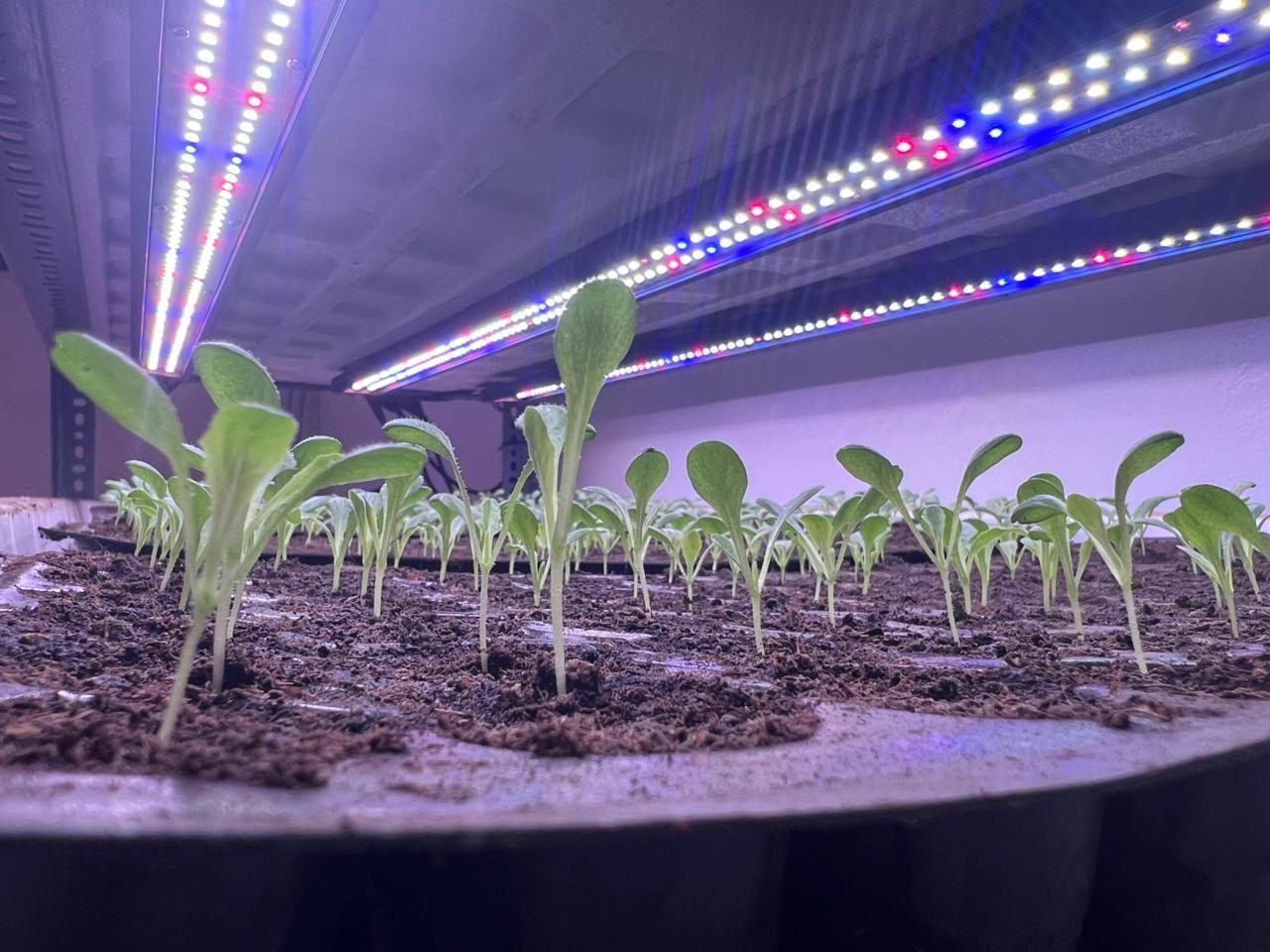
Seed is sown into sterile substrate plugs in a dedicated propagation room and germinated under controlled light, temperature and humidity. Materials that have had contact with field soil are excluded from the room, establishing crop cleanliness at the start of the cycle rather than correcting for it later.
 2
2Transplanting
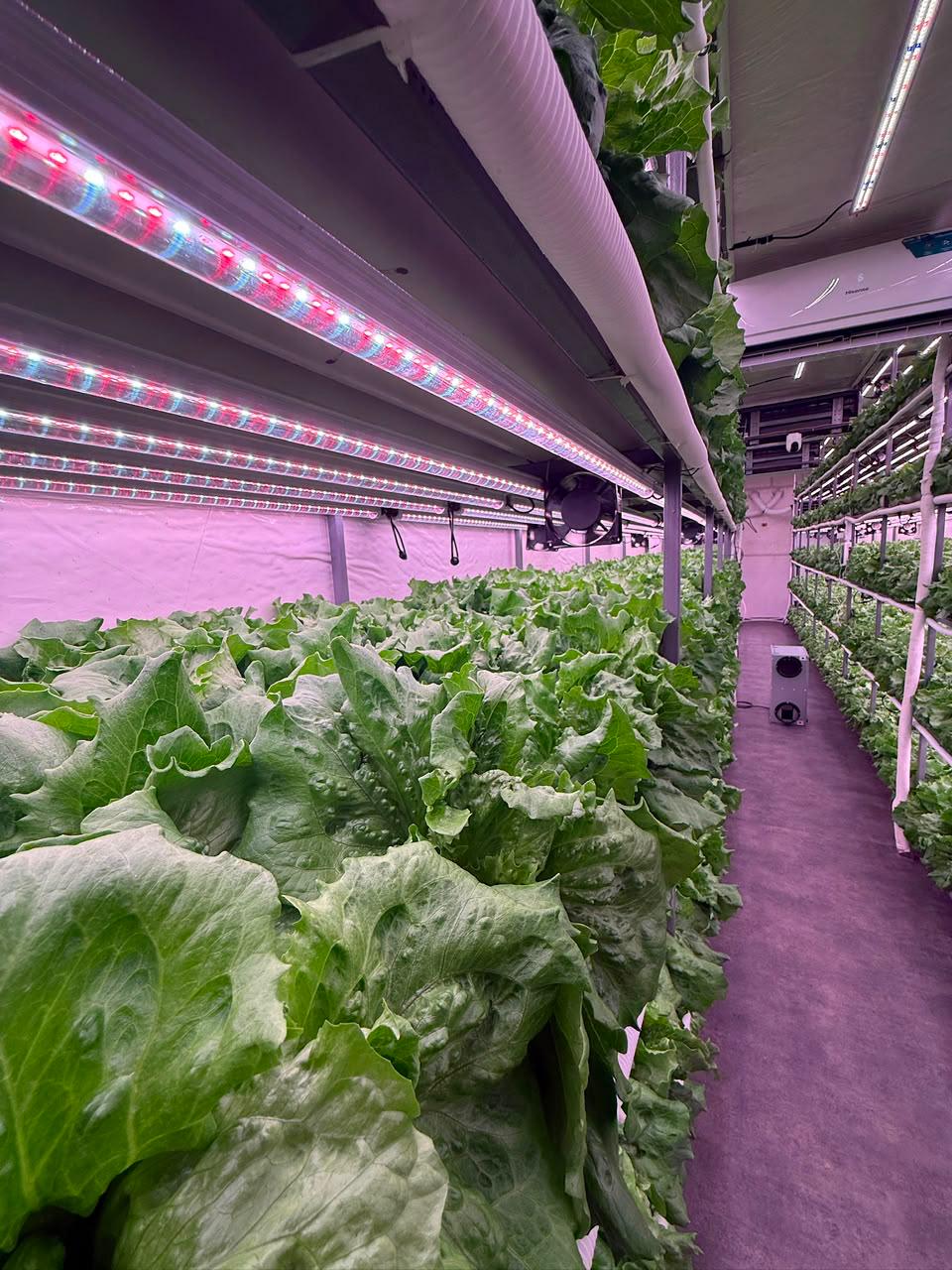
Seedlings are graded for uniformity and transferred to the grow channels at fixed spacing. Equal light exposure and equal flow across the growing plane produce a uniform crop, which is what allows a crate to be packed to a consistent count without sorting.
 3
3Nutrient-fed channels
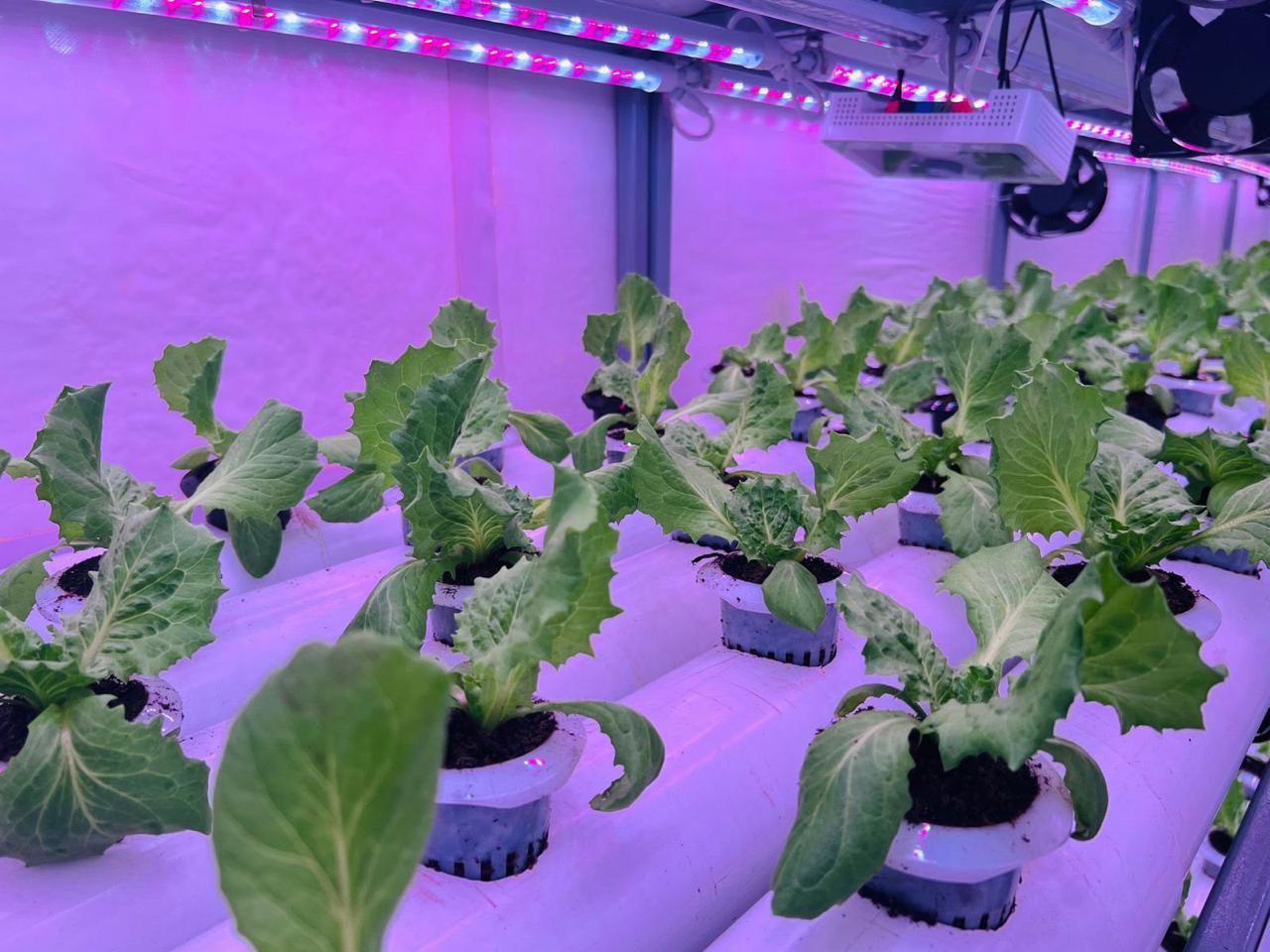
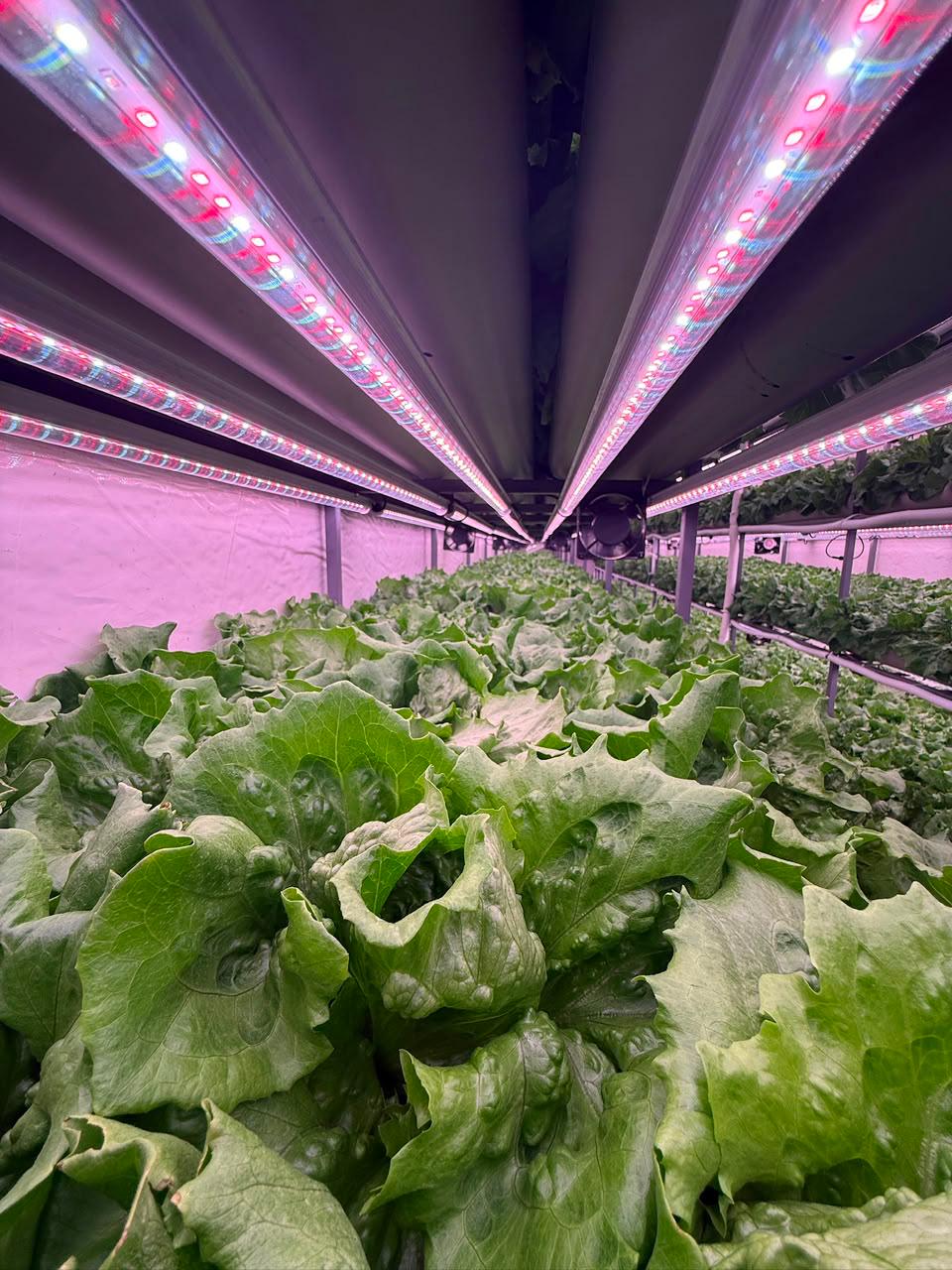
A continuous thin film of reverse-osmosis filtered, UV-treated nutrient solution passes the bare root zone, delivering water, dissolved oxygen and mineral nutrition in measured concentration. No pesticide, insecticide or fungicide is applied at any point in the production cycle: the fully sealed indoor environment removes the pest pressure that would otherwise require it.
 4
4Monitoring & control
pH, electrical conductivity, temperature and humidity are measured and recorded daily. Dosing is corrected to hold the solution within a defined range, supporting predictable head weight and producing a documented production record available for audit. Water is tested regularly in laboratories.
 5
5Harvest
Heads are cut to order rather than to stock, graded on line and transferred into the cold chain after harvest. Orders are dispatched the same day in chilled vans.
 6
6Recirculated water
Drained solution is filtered, UV-disinfected and returned to the reservoir. Only the volume taken up by the crop is replaced, and no nutrient solution is discharged to ground or watercourse.
Water savings
Closed-loop
Closed-loop hydroponics recovers and reuses the nutrient solution instead of losing water into soil. Reverse-osmosis filtration, UV treatment and regular laboratory checks keep the loop clean while reducing water use against conventional open-field production. A measured percentage can be added once Viverda publishes a metered reporting period.